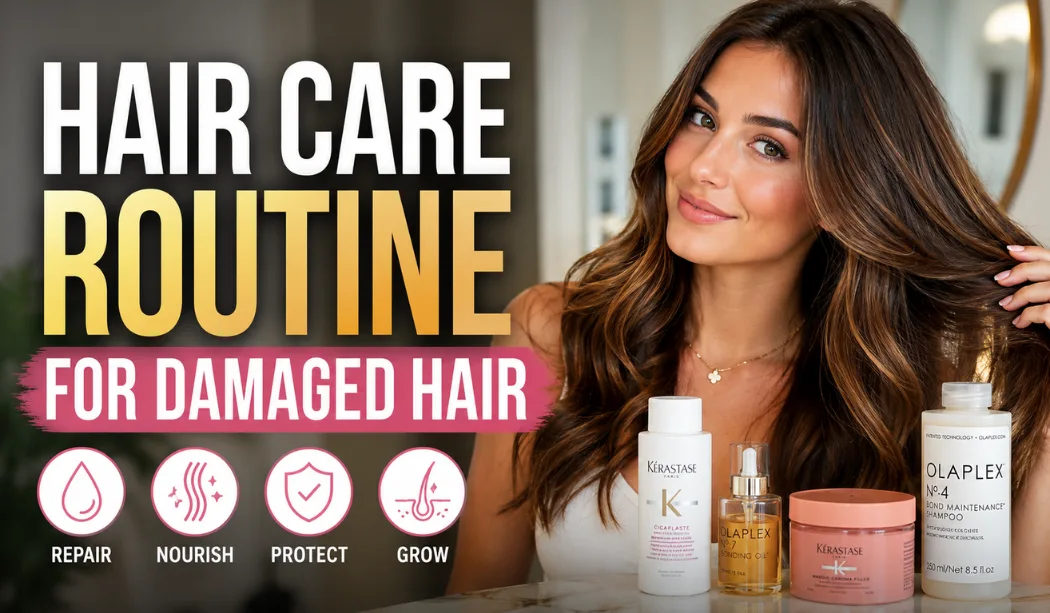



Hair Care Routine For Damaged Hair: Fix Breakage Fast
Do you glance at your reflection and see the frizzy, rough or snapping hair? Hair damage can result from heated styling tools, hot hair dyes, or even hard brushing. However, the good news is that your hair can recover its silky shine by following the correct actions. This complete damaged hair guide provides simple and expertly-guided steps that will bring the hair you have lost back to its former glory. It doesn't require costly treatments or intricate techniques to restore your hair. All you require is the sameness and good routines.
What is the Best Hair Care Routine for Damaged Hair?
The most effective hair-care routine to treat damaged hair doesn't have be an unending game of guesswork. The hair that has been damaged is stripped of its outer protective layer. This renders the inner part fragile. For this to be fixed there is a process which stops the breakage process and also helps to replenish the protein.
The fundamental rule is easy to wash less, moisturize more, and safeguard your hair from the heat. The proper regimen for maintaining your hair damaged hair concentrates on gentle cleaning and thorough repair. Make sure to utilize lukewarm water in place of boiling water as hot water strip away the healthy oils.
Starting a Safe Hair Care Routine For Damaged Hair Today
If you are building your regimen for maintaining your hair damaged hair Be consistent and it will be your greatest friend. Begin by changing to a shampoo that is sulfate free. Sulfates are a harsh type of soap that can strip your hair of moisture and cause damage that is much more severe. Make sure to gently squeeze your hair using a soft towels or an old T-shirt instead of pressing it. Rubbing causes friction that can snap fragile hair in a flash.
Understanding the Problem: Damaged Hair vs Dry Hair
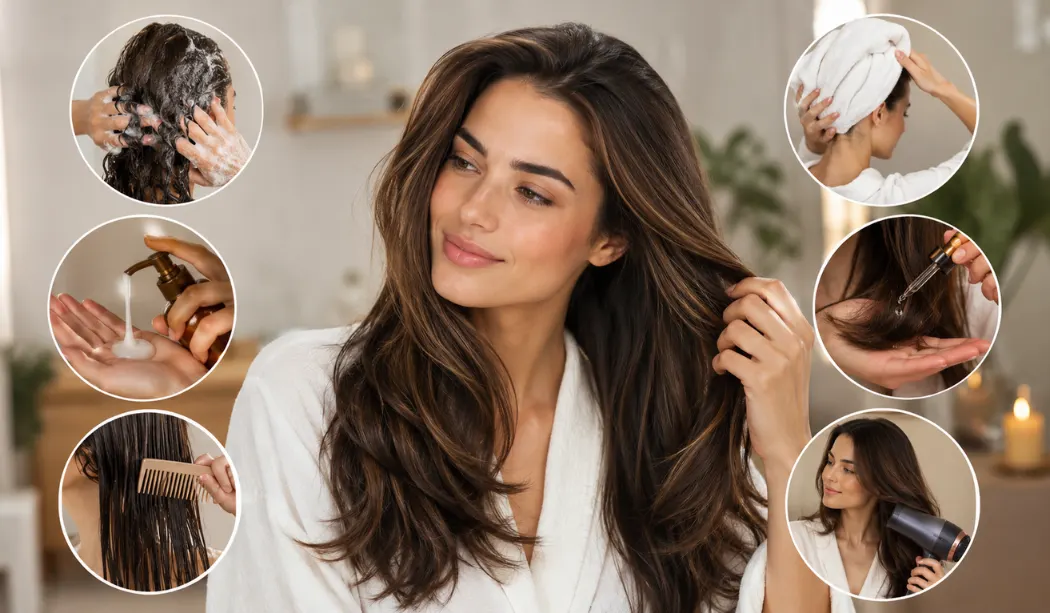
There are many people who confuse brittle strands as dryness. However, they need different treatments. Being aware of the differences between dry and damaged hair will help you provide your hair exactly the treatment they require to recover.
Dry hair lacks moisture and oil, which makes it appear dull and wild. Hair that is damaged has broken connections between the strands of chemical that can cause split ends as well as snapping. In the example below, dry hair reacts fast to the basic oils. Hair that is damaged requires structural support such as bond repair products or regular trimmings to remain solid.
Read also: 10 Best Hair Fashion Styles For Chubby Face to Look Slimmer in 2026
Watch Out for Moisture Overload Hair Symptoms
Even though adding water to your hair can be beneficial however, it is possible to do it too much. If your hair is spongy itchy, limp, or stretched like chewing gum that isn't being bouncing, you're experiencing a typical issue.
The most common signs of excessive moisture in hair. In the event of this you're experiencing hair that has excess water, but lacks protein. For balancing this take a break from your treatment for hydration and use a protein-building treatment rather.
The Mystery Solved: Why is My Hair Still Damaged After Using Conditioner?
It can be extremely disconcerting to put on a ton of product and see no improvement. Some may ask why my hair is even worse after applying conditioning products? The answer lies in the extent to which the product will actually penetrate.
The typical conditioner coats the outside of your hair shaft to help the hair feel soft for a day. They cannot fix damaged internal structures, or the deeply slits within the hair shaft. Like the illustration, deep hair repair is a process that requires amino acids and peptides which go beyond the cuticle in order to repair fractured bonds. The regular surface conditioners cannot complete the task on their own.
Deep Dive: Hair Mask vs Conditioner
In order to get the best outcomes, it is essential to understand the conflict between hair masks vs. conditioner. Conditioners that are regular in their use is the light daily moisturizer which helps to reduce tangles following an easy wash.
Hair masks are rich, deeply-treated cream that is filled with nutrition. The application of a hair mask over between 10 and 20 minutes permits the ingredients to move through the outer layer, and build up the weak center.
Creating a Great Hair Care Routine for Damaged Hair at Home
There is no need to pay hundreds of dollars in the salon of your dreams to achieve beautiful and healthy hair. Making a great regimen for hair maintenance to repair damaged hair at your home can be done with the right everyday habits.
"True hair healing happens in your bathroom, not just the salon chair. Daily protection saves your strands from future snapping." -- Dr. Elena Rostova, Trichologist & Hair Health Expert
Top 10 Hair Care Routine For Damaged Hair Rules for Daily Life
Use these tips to help keep your hair free from everyday damage and wear.
1.Detangle carefully before cleaning:Pre-wash step.
Make use of a comb with a wide tooth starting from the ends of your hair and work all the way to the base to keep knots from snapping during the shower.
2.Apply shampoo just to your hair:In the shower.
The roots should be massaged gently. The suds will flow over to the remainder of your hair instead scratching the ends that are fragile.
3.Use regular deep treatments:Deep repair.
Switch your normal conditioner to an exclusive repair mask at least each week, at least twice.
4.Pat dry using the help of a cotton shirt.Post-shower treatment.
Do not twist or wring your hair. Blot it gently and absorb any excess water but without lifting the cuticle of your hair.
5.Apply the leave-in protector:Before styling.
Cover damp hair with the light leave-in cream in order to keep moisture in and prevent humidity.
6.Always use a heat protectant spray:Styling safety.
If you have to use the heat source, apply a thermal shield to stop excessive temperatures from melting hair's protein.
7.Lower your tool temperature:Tool setting.
Make sure to keep your flat irons and curling tools below 350degF (175degC) in order to keep them from burning your hair shaft.
8.Sleep on the satin of your pillowcase:Night routine.
Satin helps reduce friction in your hair as you twist and turn. It also stops frizz in the morning as well as split ends.
9.Get regular trimsEvery eight weeks.
Trim off about a quarter-inch from the ends every day to keep split ends from ascending up the shaft of hair.
10.Avoid straight hairstyles that are tight:Daily styling.
Discard the elastic bands with a tight fit which tug on your scalp and split hair along the hairline.
G Green: How to Restore Damaged Hair Naturally?
If you're trying to stay clear of the synthetic chemicals, then you could be wondering, How to repair damaged hair with natural remedies? Natural oils work amazing by mimicking the scalp's natural sebum (natural oil). Organic coconut oil that is pure argan oil Jojoba oil are excellent alternatives. Coconut oil is special since it actually gets deeply inside the hair shaft in order to decrease loss of protein in washes.
Building a Simple Hair Mask Routine for Damaged Hair
If you want to see a real change make sure you have a designated treatment routine for broken hair. Apply the mask you prefer to hair that is damp every Sunday afternoon. Then, wrap the hair in a warm moist towel and allow it to remain for at least 20 minutes before rinse.
Homemade Hair Mask vs Store Bought Formulas
If you are deciding between the two options of homemade hair mask or a the store-bought choice, take a look at the time you have available:
- Home-made masks: Mixing avocado, honey and olive oil in your kitchen offers vitamins in raw form without additional preservatives.
- Purchased from stores Masks: Formulated products have hydrolyzed proteins. This means that the protein molecules are tiny enough that they can fit in hair cracks.
Super Foods to Repair Damaged hair, from the inside.
These products are only able to fix hair already growing. In order to grow hair that is strong and healthy You need to include the correct food items.
Concentrating on the specific food items that heal damaged hair can transform your appearance by transforming your hair from inside out. Consume plenty of eggs to get biotin and iron, as well as spinach and wild salmon for omega-3 oil. Your body needs these nutrients to form sturdy, durable hair bonds at the very beginning.
Read also: Curly Hair Care Secrets: Expert Tips for Every Curl Type
Advanced Restoration: Hair Care Routine for Damaged Hair Overnight

The nighttime hours are the ideal time for restoring your hair, without any external interference. Applying a specific treatment routine for damaged hair for a few hours will protect your hair from the constant friction of your pillow. You can apply a little liquid, silicon-free serum on the dry ends prior to going to bed. Hair that is loosely braided helps keep it in place and prevents knots from developing during sleep.
Choosing Wisely: Natural Remedies vs Salon Treatments
Before you spend money, look at the comparisons the natural remedies and hair salon treatments attentively:
| Treatment Type | Benefits | Best For | Cost Level |
| Natural Remedies | Soft, non-toxic and easy to make at the home | Dryness, but not too dry and with light frizz | Very Low |
| Salon Treatments | Fast, high-concentration bond builders | Bleach or extreme chemical causes burns | High |
Frequently Asked Questions
Can damaged hair be fully cured?
Hair cells that are dead do not heal as the skin. But, if you follow a well-planned hair care routine for damaged hair can glue the cuticles that are cracked down and strengthens the hair's core, preventing further breakage.
How often should you wash damaged hair?
Make sure to clean your hair just two or 3 times each weekly. Every day washing removes the natural oils that protect your hair, leaving hair that is damaged completely defenceless.
Is air-drying always safer than blow-drying?
It's not always the case! In the event that your hair remains wet, it will cause the inner shaft to expand and exert pressure on the cuticle's outer surface. The most secure method is to let your hair air dry for up to 80% your way and afterwards blow-dry it with a cool and gentle setting.